Presentation Training for Contractors: Running the Owner Meeting That Wins the Work

For many contractors, the interview or owner meeting is where a long pursuit is decided. The team has spent weeks on the proposal, the pricing is competitive, and then the result turns on forty minutes in a conference room. Teams that lose often discover that the panel could not tell what made them different, or that the presenters seemed unprepared to answer basic questions. Presentation training can address these issues before the next interview. This post describes how a structured training program prepares contractors for owner meetings that decide the award. Contractors that invest in this preparation tend to see the benefit in the quality of their short list conversations as well as the final award decision. The steps below can be run in half-day workshops.
Choose the three messages that matter
An interview that tries to cover everything leaves the panel with nothing. Training begins with a discussion of the three points the owner should remember: for instance, that the team has built this facility type before, that the project manager will remain on the job through closeout, and that the schedule approach reduces disruption to operations. Everything in the presentation either supports one of those messages or is cut. The exercise forces the team to decide what it is actually selling.
Assign roles with a purpose
Contractor teams often include a principal, a project executive, a project manager, a superintendent, and an estimator. Each should have a clear reason to speak. Training helps assign sections based on credibility: the superintendent describes logistics, the project manager explains cost control, and the executive closes with commitment. Presenters learn to hand off with a short, rehearsed sentence and to avoid repeating each other. The panel notices when a team speaks as one.
Answer the question that was asked
Many contractors respond to a question with a general statement about experience. Training builds the habit of answering directly in the first sentence and supporting it with a short example. Practice sessions use a bank of typical questions on cost, schedule, staffing, safety, and subcontractor selection, and the group critiques each answer for clarity and length. Over several rounds, answers become shorter and more convincing.
Show the plan for the first ninety days
Owners want to know how the project will start. A simple timeline of the first ninety days, covering submittals, mobilization, permit steps, and communication routines, reassures them that the team has thought about execution. In training, participants build this slide together and learn to talk through it without reading. It gives the panel a concrete picture of what working together will look like.
Rehearse the full interview on the clock
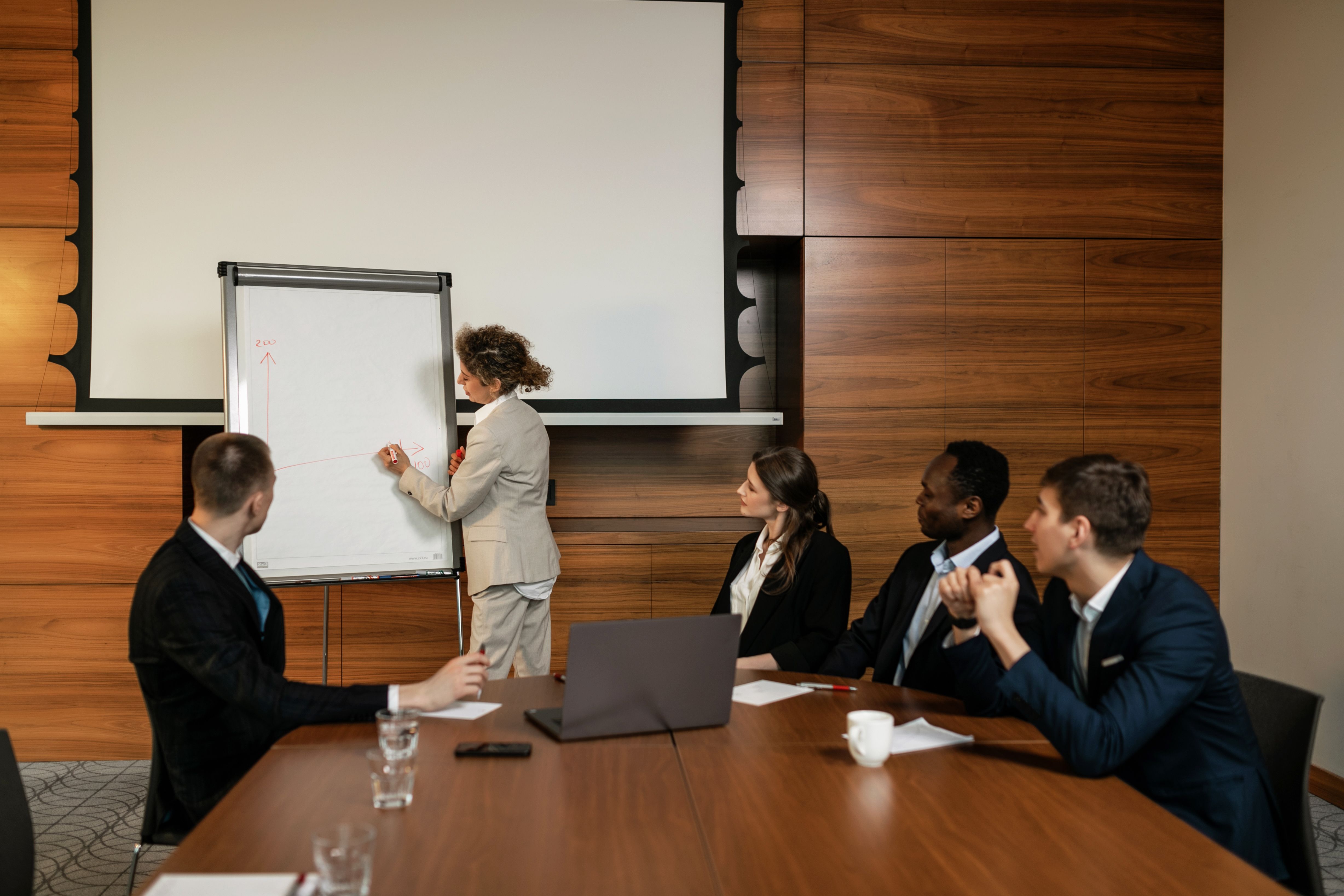
Timing is one of the most common failures. Training includes at least one full run in the same format as the real interview, with a stopwatch and a mock panel that interrupts. Teams learn how long each section takes, where to cut, and how to recover if the panel asks to move ahead. Recording the run and watching it back reveals filler words and habits that the presenters cannot hear in the moment.
Debrief after every interview
Win or lose, the team should hold a short debrief. What questions surprised us, and which answers worked? Training programs include a template for this review and a way to store lessons so the next team benefits. Over a year, the library of questions and answers becomes a real asset. Superintendents and foremen are often the most credible voices on a job, yet they are the least likely to have presented formally. Training gives them a short, low-pressure format, such as a three minute explanation of how they would stage the first month. Peers listen and offer one suggestion. After two or three rounds, many field leaders become effective presenters, and the firm gains a group of speakers who can carry the logistics and safety portions of an interview with authority that no executive can match.
The Bottom Line
Winning an interview depends on preparation more than charisma. Contractors who select a few key messages, assign roles with care, answer questions directly, present a clear start plan, rehearse on the clock, and learn from each outcome will perform better. Presentation training provides the framework and the practice to make that routine.